
Free Proxy Lists vs a Proxy API: Why Free Breaks in Production
Free proxy lists are attractive for one reason: the price tag.
But the moment you:
- run a scraper daily
- increase concurrency
- expand to multiple targets
…free proxies stop being “free”.
They become an operational tax.
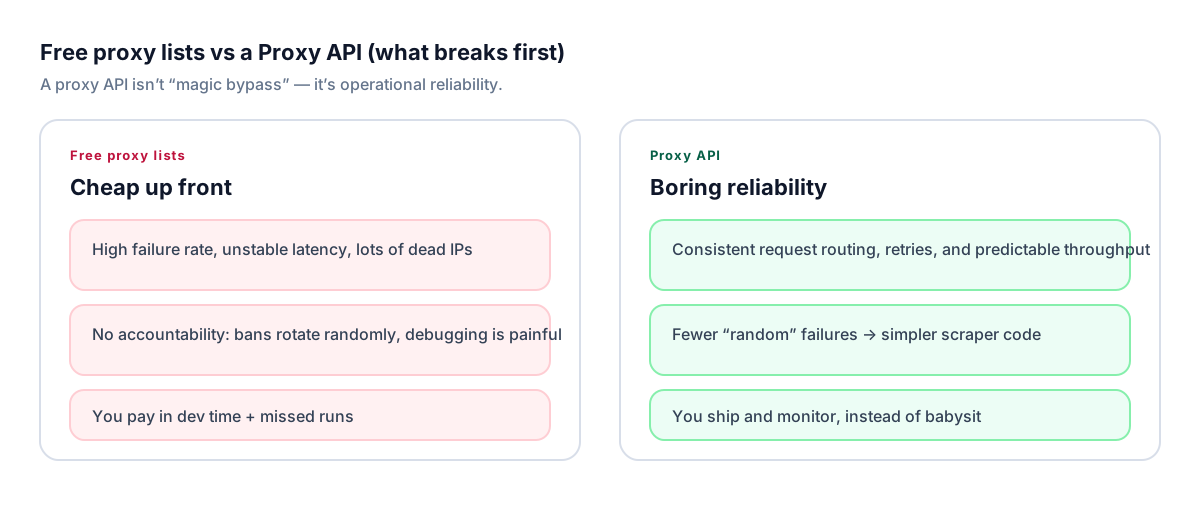
If you’re babysitting runs, debugging random failures, and re-running crawls, the cost isn’t proxies — it’s your time. ProxiesAPI is built to make scraping boring.
What actually breaks first
1) Failure rate
Free lists are full of:
- dead IPs
- slow IPs
- blacklisted IPs
Your scraper looks flaky even when your code is fine.
2) Debuggability
When a request fails, you can’t answer:
- was it the target?
- was it the proxy?
- was it transient?
So you re-run. And re-run. And you waste days.
3) Consistency
The only thing you can’t scale is unpredictability.
What a proxy API actually fixes
A proxy API doesn’t promise magic bypass.
What it does promise (and what you want):
- more consistent routing
- fewer random failures
- predictable throughput
So your scraper can be simpler:
- fewer edge-case branches
- fewer “maybe retry?” guesses
- clearer monitoring
A practical way to decide
If any of these are true, you’re already beyond free lists:
- you run more than a few hundred requests/day
- you need the run to finish reliably (cron)
- you’re scraping multiple sites
- you’re exporting data someone depends on
ProxiesAPI usage (canonical)
The integration should be stupid-simple:
curl "http://api.proxiesapi.com/?key=API_KEY&url=https://example.com"
Your scraper treats ProxiesAPI as the fetch layer.
FAQ (short)
Is a proxy API always necessary? No. If you’re scraping one friendly site with 20 requests/day, skip it.
Why not just buy a proxy list? Because the cost isn’t the list — it’s reliability, monitoring, and consistent results.
If you’re babysitting runs, debugging random failures, and re-running crawls, the cost isn’t proxies — it’s your time. ProxiesAPI is built to make scraping boring.