
Scrape Recipe Data from AllRecipes with Python (Ingredients + Steps + Nutrition)
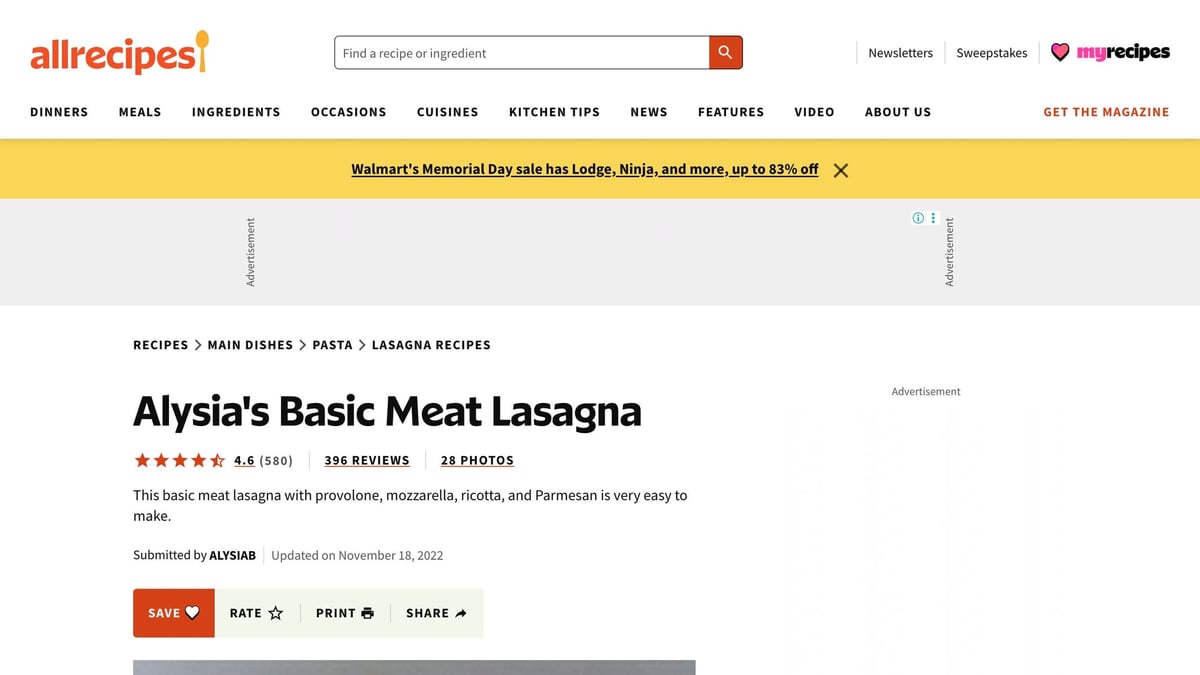
AllRecipes recipe pages usually contain a goldmine: a JSON-LD “Recipe” object with ingredients, steps, and nutrition.
So instead of guessing brittle CSS selectors, we’ll:
- fetch the HTML
- find
<script type="application/ld+json">blocks - parse the Recipe object
- normalize it into clean rows you can store/search
Recipes look simple, but large crawls fail on timeouts, flaky pages, and throttles. ProxiesAPI belongs in the fetch layer so your JSON-LD parsing stays the same while you scale.
Setup
python3 -m venv .venv
source .venv/bin/activate
pip install requests beautifulsoup4 lxml pandas
export PROXIESAPI_KEY="YOUR_KEY"   # optional
Step 1: A clean fetch layer (optional ProxiesAPI)
Keep your scraper architecture clean:
fetch HTML → parse JSON-LD → export
import os
import time
import random
import urllib.parse
import requests

PROXIESAPI_KEY = os.environ.get("PROXIESAPI_KEY", "")
TIMEOUT = (10, 40)  # connect, read

session = requests.Session()


def proxiesapi_url(target_url: str) -> str:
    if not PROXIESAPI_KEY:
        raise RuntimeError("Set PROXIESAPI_KEY in your environment")
    return (
        "http://api.proxiesapi.com/?auth_key="
        + urllib.parse.quote(PROXIESAPI_KEY, safe="")
        + "&url="
        + urllib.parse.quote(target_url, safe="")
    )


def fetch_html(url: str, *, use_proxiesapi: bool = True, max_retries: int = 4) -> str:
    last_err = None
    for attempt in range(1, max_retries + 1):
        try:
            final_url = proxiesapi_url(url) if (use_proxiesapi and PROXIESAPI_KEY) else url
            r = session.get(
                final_url,
                timeout=TIMEOUT,
                headers={
                    "User-Agent": (
                        "Mozilla/5.0 (Macintosh; Intel Mac OS X 10_15_7) "
                        "AppleWebKit/537.36 (KHTML, like Gecko) "
                        "Chrome/123.0 Safari/537.36"
                    ),
                    "Accept-Language": "en-US,en;q=0.9",
                },
            )
            r.raise_for_status()
            html = r.text
            if not html or len(html) < 2000:
                raise RuntimeError(f"Suspiciously small HTML ({len(html)} bytes)")
            return html
        except Exception as e:
            last_err = e
            time.sleep(min(10, 2 ** (attempt - 1)) + random.random())
    raise RuntimeError(f"HTML fetch failed after {max_retries} attempts: {last_err}")
Step 2: Parse the Recipe JSON-LD
AllRecipes often includes multiple JSON-LD blocks (BreadcrumbList, WebPage, Recipe). We’ll scan for the one that contains a Recipe object.
import json
from bs4 import BeautifulSoup


def iter_json_ld(html: str) -> list[dict]:
    soup = BeautifulSoup(html, "lxml")
    blocks = soup.select('script[type="application/ld+json"]')
    out: list[dict] = []

    for b in blocks:
        raw = (b.string or "").strip()
        if not raw:
            continue
        try:
            data = json.loads(raw)
        except Exception:
            continue

        if isinstance(data, dict):
            out.append(data)
        elif isinstance(data, list):
            out.extend([x for x in data if isinstance(x, dict)])

    return out


def find_recipe_obj(objs: list[dict]) -> dict | None:
    def is_recipe(d: dict) -> bool:
        t = d.get("@type")
        if isinstance(t, list):
            return any(x == "Recipe" for x in t)
        return t == "Recipe"

    # Sometimes the recipe is nested under @graph.
    for o in objs:
        if is_recipe(o):
            return o
        g = o.get("@graph")
        if isinstance(g, list):
            for node in g:
                if isinstance(node, dict) and is_recipe(node):
                    return node
    return None
Step 3: Normalize fields (ingredients, steps, nutrition)
Recipe JSON-LD can vary slightly. Normalize defensively.
from typing import Any


def normalize_instructions(val: Any) -> list[str]:
    if not val:
        return []
    if isinstance(val, str):
        return [val.strip()]
    if isinstance(val, list):
        steps: list[str] = []
        for x in val:
            if isinstance(x, str):
                steps.append(x.strip())
            elif isinstance(x, dict):
                # HowToStep / HowToSection
                if "text" in x and isinstance(x["text"], str):
                    steps.append(x["text"].strip())
                elif "itemListElement" in x and isinstance(x["itemListElement"], list):
                    for y in x["itemListElement"]:
                        if isinstance(y, dict) and isinstance(y.get("text"), str):
                            steps.append(y["text"].strip())
        return [s for s in steps if s]
    if isinstance(val, dict) and isinstance(val.get("text"), str):
        return [val["text"].strip()]
    return []


def norm_recipe(recipe: dict) -> dict:
    n = recipe.get("nutrition") if isinstance(recipe.get("nutrition"), dict) else {}

    return {
        "name": recipe.get("name"),
        "description": recipe.get("description"),
        "url": recipe.get("url"),
        "author": (recipe.get("author") or {}).get("name") if isinstance(recipe.get("author"), dict) else recipe.get("author"),
        "prep_time": recipe.get("prepTime"),
        "cook_time": recipe.get("cookTime"),
        "total_time": recipe.get("totalTime"),
        "recipe_yield": recipe.get("recipeYield"),
        "category": recipe.get("recipeCategory"),
        "cuisine": recipe.get("recipeCuisine"),
        "ingredients": recipe.get("recipeIngredient") or [],
        "instructions": normalize_instructions(recipe.get("recipeInstructions")),
        "calories": n.get("calories"),
        "fat": n.get("fatContent"),
        "carbs": n.get("carbohydrateContent"),
        "protein": n.get("proteinContent"),
        "rating_value": (recipe.get("aggregateRating") or {}).get("ratingValue") if isinstance(recipe.get("aggregateRating"), dict) else None,
        "rating_count": (recipe.get("aggregateRating") or {}).get("ratingCount") if isinstance(recipe.get("aggregateRating"), dict) else None,
    }
Step 4: Crawl a list of recipe URLs and export
You can start with a hand-picked list of URLs. Later, add a discovery step (search/category pages) to build your URL queue.
import pandas as pd


def scrape_recipe(url: str, *, use_proxiesapi: bool = True) -> dict:
    html = fetch_html(url, use_proxiesapi=use_proxiesapi)
    objs = iter_json_ld(html)
    recipe = find_recipe_obj(objs)
    if not recipe:
        raise RuntimeError("Recipe JSON-LD not found")
    row = norm_recipe(recipe)
    row["source_url"] = url
    return row


def export(recipes: list[dict], slug: str) -> None:
    df = pd.DataFrame(recipes)
    df.to_json(f"{slug}.json", orient="records", indent=2, force_ascii=False)
    df.to_csv(f"{slug}.csv", index=False)
    print("wrote", f"{slug}.json", len(df))
    print("wrote", f"{slug}.csv", len(df))
Example run:
URLS = [
    "PASTE_ALLRECIPES_RECIPE_URL_1",
    "PASTE_ALLRECIPES_RECIPE_URL_2",
]

rows = []
for u in URLS:
    rows.append(scrape_recipe(u, use_proxiesapi=True))

export(rows, slug="allrecipes_recipes")
QA checklist
-
recipeIngredientis non-empty for 3–5 sample URLs - Instructions are parsed as a clean list of steps
- Nutrition fields are present (when the page provides them)
- Exported CSV opens cleanly and values look sane
Where ProxiesAPI fits (no hype)
AllRecipes is often parseable without proxies for small runs.
ProxiesAPI matters when you scale: lots of URLs, more failures, more retries. Keeping it in the fetch layer means your JSON-LD parsing logic stays unchanged.
Recipes look simple, but large crawls fail on timeouts, flaky pages, and throttles. ProxiesAPI belongs in the fetch layer so your JSON-LD parsing stays the same while you scale.